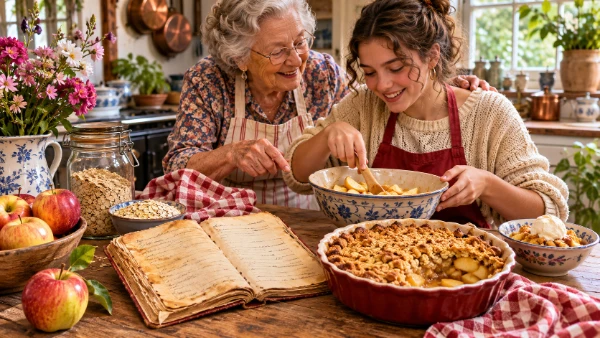
Old family recipes often preserve more than instructions for preparing a meal. They contain fragments of everyday life, reminders of seasonal celebrations and traces of cooking traditions that may have disappeared from modern kitchens. A handwritten recipe recorded more than 50 years ago can provide an unexpected connection to these memories, particularly when younger relatives decide to recreate a dish that has not been prepared for decades. Recovering such a tradition involves much more than following a list of ingredients. It requires understanding historical cooking methods, identifying suitable ingredients and speaking with family members who remember how food was prepared. Although every family has its own culinary history, the process of reconstructing an old recipe illustrates how seemingly ordinary household records can help preserve knowledge across generations.
How an Old Family Recipe Can Bring Forgotten Memories Back
Imagine finding a small, worn recipe notebook while sorting through belongings inherited from a grandparent. Its pages have yellowed with age, several corners are folded, and the handwritten instructions are beginning to fade. Among familiar recipes for bread, soups and homemade preserves is an unfamiliar apple and oat pudding recorded in the early 1970s. The ingredients are listed without exact measurements, and the preparation instructions consist of only a few sentences. Nobody in the younger generation remembers tasting the pudding, although older relatives recognise its name. This illustrative situation reflects a common challenge in family food history: written recipes frequently preserve only part of the knowledge needed to recreate a dish.
Before printed cookbooks became widely affordable, handwritten collections were an important way of recording household cooking knowledge. Families copied recipes from relatives, neighbours and friends, often adapting them according to local ingredients and personal preferences. Such notebooks remained useful throughout the twentieth century, even as commercially published cookbooks became increasingly common. A recipe might be passed from mother to daughter, shared between sisters or written down after a particularly successful family gathering. Over time, individual households developed their own variations of familiar dishes, sometimes changing quantities or preparation methods without recording the adjustments. These small differences could eventually become recognised family traditions.
The age of a handwritten recipe does not necessarily establish when the dish was invented. A notebook dated 1973, for example, might contain instructions copied from a much older relative. Alternatively, the recipe could have been adapted from a contemporary cookbook or collected from a neighbour. Establishing its origins requires examining the document carefully and comparing it with other family records. Different handwriting, corrections, ingredient substitutions and notes in the margins may provide useful clues. Photographs, letters and memories of family celebrations can help explain when the food was served and why it became important to the household. The resulting picture may be incomplete, but even partial evidence can reveal meaningful details about earlier cooking habits.
Tracing the History Behind a Handwritten Recipe
The first step in investigating an inherited recipe is to preserve the original information. Every ingredient, measurement and instruction should be transcribed exactly as written, including unfamiliar expressions and apparent mistakes. Older recipes sometimes use household measurements such as a teacup, spoonful or handful without specifying a standard quantity. These descriptions made sense to experienced cooks who knew the size of their utensils and understood the intended consistency of a mixture. For someone recreating the dish decades later, however, the same instructions can be difficult to interpret. Keeping an accurate transcription makes it possible to experiment with different measurements without losing the original wording.
Family conversations can reveal information that never appeared in the notebook. An older relative might remember that the pudding was usually prepared during autumn, when apples were collected from the garden. Another might recall a particular baking dish, the smell of the kitchen or the way the dessert was served after Sunday lunch. These details can help establish the recipe’s place within everyday family life. It is useful to speak with relatives separately because memories may differ, particularly when several decades have passed. Recording their recollections, together with the dates and circumstances of the conversations, allows later generations to distinguish remembered traditions from information confirmed by written documents.
Understanding the historical setting is equally important. British households in the 1970s used a mixture of inherited cooking methods and increasingly convenient modern appliances. Gas and electric cookers were common, while packaged ingredients and supermarket shopping were becoming established features of everyday life. Nevertheless, many families continued to bake traditional desserts, preserve seasonal produce and prepare meals using recipes learnt from parents or grandparents. A simple apple pudding made with oats, butter and sugar would therefore reflect familiar domestic ingredients rather than necessarily representing an ancient regional speciality. Its significance might lie in the particular preparation method, the occasions on which it was served and the memories attached to it.
Recreating Traditional Ingredients and Forgotten Cooking Methods
Once the historical details have been examined, the next challenge is making the dish. The ingredients named in an old recipe may no longer be sold under the same names, while modern alternatives can behave differently during cooking. A reference to coarse oatmeal, for example, may indicate a texture unlike the fine oats or instant porridge products commonly found in supermarkets. Similarly, a recipe that simply calls for cooking apples may have been written with a particular garden variety in mind. Choosing ingredients therefore requires more thought than purchasing products with roughly similar names. The aim is to understand what each ingredient contributed to the original preparation and select modern equivalents that produce comparable results.
Traditional British apple varieties provide a useful example. Bramley apples are valued for their acidity and their ability to soften during cooking, making them suitable for pies, crumbles and other baked desserts. Sweeter eating apples may retain a firmer texture and create a noticeably different flavour. Flour presents similar difficulties because the type of grain, milling process and degree of refinement influence how dough or batter behaves. Butter, dripping and other traditional fats also produce different textures and flavours. Recreating a recipe faithfully does not always require finding an identical historical ingredient, but understanding these differences helps prevent substitutions that completely change the character of the dish.
Local food producers can be valuable sources of traditional ingredients. Independent mills may supply stoneground flour or coarse oatmeal, while orchards and farm shops sometimes offer older fruit varieties that are less common in large supermarkets. Seasonal markets can provide fresh produce associated with regional cooking traditions. However, the description of an ingredient as traditional does not guarantee that it matches what a particular family used 50 years ago. Agricultural varieties, production methods and commercial standards change over time. Comparing available ingredients with historical descriptions and family recollections offers a more reliable approach. When an exact match cannot be established, the substitution should be recorded rather than presented as an authentic original.
Reconstructing the Original Dish in a Modern Kitchen
For the illustrative apple and oat pudding, the cooking process could begin with a small experimental batch. Cooking apples would be peeled, cored and cut into pieces, while coarse oatmeal, butter and sugar would form the basis of the remaining mixture. Because the imaginary notebook contains no verified quantities, any proportions used during reconstruction would represent a modern interpretation rather than an established historical formula. The cook could begin with a modest amount of each ingredient, recording the measurements and observing how the mixture behaves. The apples’ moisture, the oats’ texture and the amount of fat would all influence the final consistency. A written record of these observations would make each subsequent attempt more informative.
Interpreting old cooking instructions also requires attention to equipment and temperature. Expressions such as a moderate oven, gentle heat or cook until ready were once familiar to people who relied heavily on observation and experience. Modern ovens allow more precise temperature control, but there is no universal conversion for these descriptions because the appropriate heat depends on the ingredients, dish and intended result. A deep ceramic baking dish retains and distributes heat differently from a shallow metal tray. Covering a pudding during baking can reduce moisture loss, whereas leaving the surface exposed encourages browning. Rather than choosing an arbitrary temperature and treating it as historically correct, a careful reconstruction should test the method and document the outcome.
Repeated preparation is often necessary before the finished dish resembles family recollections. If the pudding is excessively dry, the next version might use additional fruit or a different oatmeal texture. If it tastes too sweet, the cook could reduce the sugar or select sharper apples. Relatives who remember eating the original may recognise certain characteristics, such as a soft interior, a slightly crisp surface or a particular balance between sweetness and acidity. Their feedback is useful, although sensory memories cannot establish exact historical measurements. Modern food safety practices must also remain a priority, especially when reconstructing old recipes involving meat, dairy products, eggs or preserved foods. Historical methods should never override current guidance on hygienic preparation, safe cooking and appropriate storage.
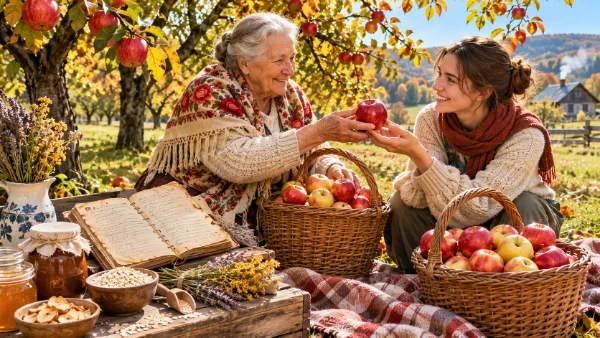
Preserving Family Culinary Knowledge for Future Generations
Successfully preparing a forgotten dish is only one part of reviving a family tradition. The greater challenge is ensuring that the recipe does not disappear again when the people who remember it are no longer available to explain its preparation. Cooking together offers an effective way of sharing practical knowledge between generations. Younger relatives can help select ingredients, measure quantities and prepare the dish while learning why particular methods were traditionally used. They may also notice details that experienced cooks take for granted, such as how thick a mixture should become or when fruit has softened sufficiently. These conversations turn an old recipe into a practical learning experience rather than a document preserved solely for sentimental reasons.
Preparing traditional food can also encourage discussions about family history. The smell of baking apples, the sound of familiar kitchen utensils or the appearance of a particular dish may remind older relatives of childhood meals and former family gatherings. They might describe growing vegetables, collecting fruit, preserving food for winter or helping grandparents with household tasks. Such recollections provide insight into the everyday experiences of earlier generations, particularly aspects of domestic life that rarely appear in official historical records. Recording these conversations with permission allows future relatives to understand the social circumstances surrounding the recipe. The people, places and occasions connected with a dish can become as meaningful as the ingredients themselves.
Family traditions do not have to remain completely unchanged to survive. Recipes naturally evolve as households move, ingredients become more or less available, dietary requirements change and younger cooks develop their own preferences. A pudding prepared in the 2020s may differ slightly from the version served in the 1970s while retaining its recognisable flavour and purpose. The important distinction is between preserving an accurate record of the older preparation and documenting later adaptations. Maintaining both versions allows family members to understand how the dish developed. It also prevents modern changes from being mistakenly attributed to relatives who prepared the food decades earlier.
Keeping a Family Recipe Alive for Another 50 Years
Creating a family recipe archive is one of the most practical ways to protect this knowledge. The original notebook should be kept in a clean, dry location, away from direct sunlight and unnecessary handling. Good-quality photographs or scans can preserve its handwriting, corrections, stains and marginal notes. Digital copies should include both the original wording and a clearly written modern version containing tested measurements and preparation instructions. Photographs taken during reconstruction can show useful stages of the process, particularly where texture or appearance is difficult to describe. Keeping copies in more than one secure location reduces the risk of losing the information through damage, accidental deletion or the deterioration of the original paper.
A useful archive should also explain the history of each recipe. Details may include the name of the person who recorded it, the approximate date, the household where it was prepared and the occasions associated with the dish. Memories collected from relatives can be preserved alongside photographs of the people involved. If different family members remember different methods, their accounts should be retained separately rather than combined into an invented definitive version. Later generations can then examine the available evidence and understand how the recipe changed over time. This approach gives the archive lasting value because it records not only practical cooking instructions but also the personal history that explains their importance.
The most meaningful way to keep a culinary tradition alive is to continue preparing the food. A rediscovered pudding could become part of an annual autumn gathering, a family celebration or an ordinary Sunday meal. Younger relatives might eventually teach their own children how to make it, using both the original notebook and the reconstructed instructions. Over time, new photographs, memories and adjustments would join the earlier records, creating a continuing account of the family’s cooking history. A handwritten recipe from more than 50 years ago would no longer be simply an ageing piece of paper. It would remain part of everyday family life, connecting generations through familiar ingredients, shared meals and the knowledge preserved by those who cooked before them.