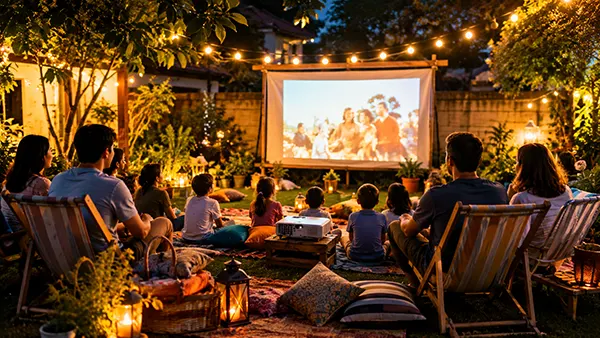
What began as a simple idea between a few neighbours eventually became one of the most anticipated events in the local community. A small outdoor film night, organised with modest equipment and a shared enthusiasm for spending time together, transformed an ordinary courtyard into a place where people could meet, talk, and create lasting memories. The story demonstrates how small initiatives can strengthen neighbourhood connections and establish traditions that continue for years.
The First Film Night: A Simple Idea with Unexpected Results
The idea emerged during a casual conversation between residents who noticed that many neighbours rarely interacted despite living only a few metres apart. People greeted one another politely but had few opportunities to spend meaningful time together. An outdoor film screening seemed like an affordable and accessible activity that could bring everyone together.
The organisers borrowed a projector, used a white wall as a screen, and invited residents through printed notices and messaging groups. No one expected a large turnout, yet families, young professionals, and elderly residents all appeared with folding chairs, blankets, and snacks. The atmosphere immediately felt welcoming and relaxed.
By the end of the evening, conversations continued long after the credits rolled. Neighbours who had previously been strangers exchanged phone numbers and discussed ideas for future gatherings. The success of the event revealed a strong desire for local social activities that required little expense but offered genuine human connection.
Why the Event Resonated with Residents
One reason for the evening’s popularity was its simplicity. Residents did not need tickets, special clothing, or extensive planning. They only needed to walk downstairs and join the gathering. This low barrier to participation encouraged people from different age groups and backgrounds to attend.
The outdoor setting also contributed to the event’s appeal. Watching a film under the evening sky created a different experience from visiting a traditional cinema. Children played nearby before the screening, while adults enjoyed informal conversations in a comfortable environment.
Perhaps most importantly, the event addressed a common challenge in modern urban life: limited interaction between neighbours. Many residents realised that strong local relationships could improve daily life, increase trust, and create a greater sense of belonging within the community.
Building a Tradition Through Consistency and Participation
After the successful debut, residents agreed that the film night should not be a one-time occasion. A small volunteer group formed to coordinate future screenings, select films, and organise practical details. Responsibilities were shared so that no individual carried the entire workload.
Regular scheduling played a significant role in establishing the tradition. Instead of organising events randomly, the community chose specific evenings during warmer months. Residents began marking the dates in advance and planning their schedules around the screenings.
The organisers also encouraged participation by inviting suggestions for future films. Family movies, classic comedies, documentaries, and locally produced works all appeared in the programme. This collaborative approach helped residents feel that the tradition belonged to everyone rather than a small organising committee.
Overcoming Practical Challenges
Like any community initiative, the film nights encountered obstacles. Weather conditions occasionally forced postponements, while technical issues sometimes interrupted screenings. However, organisers treated these challenges as opportunities to improve future events.
Funding remained modest and transparent. Instead of charging admission, residents voluntarily contributed small amounts when equipment maintenance or replacement was required. This approach maintained accessibility while ensuring the continuation of the project.
Communication also improved over time. Dedicated messaging groups, notice boards, and email updates helped keep everyone informed. As a result, attendance became more predictable and planning became easier for volunteers.

The Long-Term Impact on the Neighbourhood
Several years after the first screening, the courtyard film night became a recognised local tradition. New residents often learned about it shortly after moving into the area and viewed it as a distinctive feature of the neighbourhood.
The initiative produced benefits beyond entertainment. Residents became more willing to help one another, organise additional events, and cooperate on community projects. Stronger personal relationships created a more supportive living environment.
Children who attended the early screenings grew up associating the courtyard with positive community experiences. Meanwhile, older residents appreciated having regular opportunities to socialise without travelling far from home. The tradition proved valuable across generations.
Lessons Other Communities Can Learn
The story demonstrates that meaningful community traditions do not require significant budgets or complex planning. A simple idea, supported by a few motivated individuals, can generate lasting positive effects when residents share a common goal.
Consistency is equally important. Holding events regularly helps establish expectations and encourages participation. Over time, people begin to view the gathering as a natural part of community life rather than an occasional activity.
Most importantly, successful neighbourhood traditions focus on people rather than elaborate arrangements. The courtyard film night succeeded because it created opportunities for conversation, friendship, and cooperation. Its lasting popularity shows that strong communities are often built through small but meaningful shared experiences.