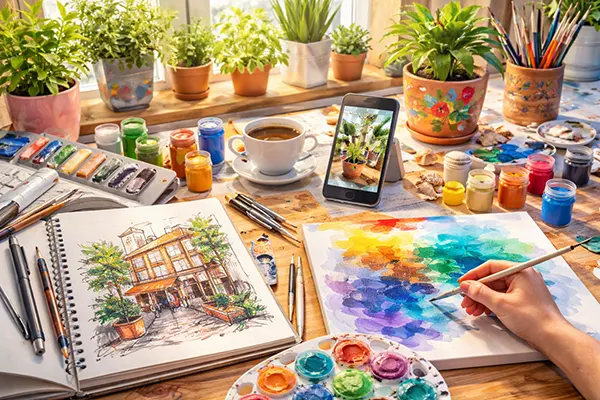
Not every hobby requires months of preparation before you see tangible results. In 2026, when many people balance hybrid work, short breaks and limited free time, activities with quick, visible progress are especially valuable. A two-week window is realistic: it is long enough to build a routine, yet short enough to maintain motivation. Below are seven creative hobbies where improvement is noticeable within 14 days, even for beginners, provided you practise consistently and follow a simple structure.
1. Urban Sketching and Daily Drawing Practice
Urban sketching is one of the fastest ways to see creative growth. All you need is a sketchbook, a fineliner and perhaps a set of watercolours. In the first few days, your lines may feel uncertain, but by drawing one small scene a day — a café interior, a park bench, your kitchen table — you quickly develop hand control and observation skills.
By the end of week one, you will notice cleaner proportions and more confident shading. The human brain adapts quickly to repetitive visual tasks. Studies in visual learning show that daily short sessions (20–30 minutes) accelerate muscle memory in fine motor skills.
After 14 days, most beginners can complete a balanced A5 sketch in under an hour. The visible difference between day one and day fourteen is striking: perspective improves, shadows look intentional and compositions become more structured.
How to Structure 14 Days of Drawing
Start with simple objects for the first three days — mugs, shoes, plants. Focus only on outline and proportion. Avoid perfectionism; the goal is repetition, not a masterpiece.
Days four to ten should include light and shadow practice. Choose one light source and stick to it. Limiting variables helps you see improvement clearly and reduces frustration.
During the final four days, combine elements into small scenes. Compare your first sketch with your last. This visual contrast is powerful and reinforces motivation to continue.
2. Smartphone Photography with Editing Skills
Modern smartphones in 2026 offer advanced computational photography. With intentional practice, composition and lighting skills improve rapidly. Within a fortnight, beginners often shift from random snapshots to structured, visually appealing images.
The key lies in learning three principles: rule of thirds, natural light positioning and controlled exposure. Applying these deliberately for two weeks changes how you see your surroundings.
Editing is equally important. Free mobile apps now include professional-level colour grading and contrast tools. After 14 days of experimenting with presets and manual adjustments, your images will look noticeably more polished.
14-Day Photography Plan
For the first five days, shoot only in natural daylight. Avoid artificial lighting to simplify learning. Take at least ten photos daily and choose the best one to edit.
From day six onwards, focus on one theme — architecture, street details or portraits. Thematic repetition accelerates improvement because your eye learns patterns faster.
In the final days, create a small digital album of your best five photos. Comparing early and later images makes your progress immediately visible.
3. Acrylic Painting and Decorative Crafts
Acrylic painting is ideal for quick results because the paint dries fast and allows layering within minutes. Beginners can complete a finished canvas in a single session, which builds confidence early on.
Over two weeks, even simple projects — abstract backgrounds, textured brush strokes, colour blending exercises — lead to a clear sense of development. The improvement is visible in smoother transitions and better control of composition.
Decorative crafts such as hand-painted tote bags, plant pots or small wooden boards add practical value. By day fourteen, you not only gain skill but also create usable items, reinforcing satisfaction.
Practical Two-Week Creative Challenge
Begin with colour studies. Spend three days mixing primary colours and experimenting with gradients. Understanding colour interaction speeds up artistic growth.
Next, complete two small canvas projects. Keep them simple: landscapes, abstract patterns or floral motifs. Focus on completing rather than perfecting.
During the final stage, apply your skills to a functional object. A painted tote bag or framed mini-canvas becomes physical proof of your progress.

4. Creative Writing Micro-Projects
Writing short fiction or reflective essays can show rapid improvement when approached strategically. Instead of aiming for a novel, focus on micro-stories of 300–600 words. Daily writing builds fluency and clarity within days.
By the end of week one, sentences become sharper and ideas more structured. Consistent revision is crucial. Rewriting the same paragraph improves rhythm and tone noticeably.
After 14 days, many beginners produce cohesive short stories with clear beginnings, middles and endings. The sense of development is evident when you compare early drafts with later pieces.
Two-Week Writing Framework
Write daily without editing for the first five days. Concentrate on finishing each piece. Completion builds discipline.
From day six to ten, revise previous texts. Focus on removing unnecessary words and clarifying structure. Editing is where visible progress often appears.
In the final four days, create one polished story. Share it with a trusted reader for feedback. External perspective highlights growth you may overlook yourself.