
A poker night at home does not need to resemble a formal tournament. For most groups, the evening works better when everyone understands the basic rules, the stakes are agreed in advance and the setup remains simple. A deck of cards, a suitable table, something to use as chips and a few clear house rules are usually enough. The idea is to create a game that is easy to follow while leaving plenty of room for conversation, food and time with friends.
Choose a Poker Format Everyone Can Follow
Texas Hold’em is often the most practical choice for a mixed group because its basic structure is straightforward. Each player receives two private cards, while five community cards are gradually placed on the table. New players do not need to learn detailed strategy before joining. Knowing the hand rankings and understanding when they can check, call, raise or fold is enough for the first few rounds.
Some people also prefer to play casino games online outside a home gathering. If you want to try that format separately, Nolimit Way includes dedicated sections for card and casino games. That is a different setting from a friendly poker night, where the group itself decides the format, limits and pace of play.
Before dealing the first hand, agree whether you are organising a cash game, a small tournament or simply playing for points. A fixed structure prevents confusion later in the evening. If real money is involved, decide the buy-in, blinds and any rebuy rules before play starts so every guest knows exactly what participation involves.
Prepare the Table Without Making It Complicated
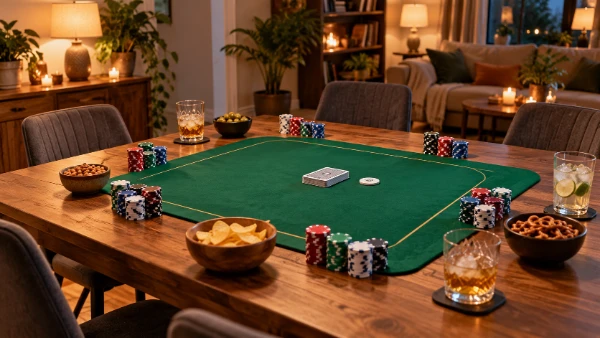
A standard 52-card deck is enough for a normal home game, and professional equipment is optional. Poker chips are convenient because colours can represent different values, but counters or other clearly distinguishable markers can also work. A small object can serve as the dealer button and move clockwise after every hand.
The table should provide enough space for private cards, chip stacks and the community cards in the centre. Good lighting is more useful than decorative accessories because everyone needs to see suits and values clearly. Keeping drinks and food slightly away from the playing area also reduces the chance of cards becoming damaged during the evening.
Settle a few procedural rules before starting. Decide who will shuffle and deal, how the dealer position moves and what happens if a card is exposed accidentally. There is no reason to create a long rulebook. The purpose is simply to make common situations easy to resolve without interrupting the game for a lengthy discussion.
Keep the Stakes and Pace Comfortable
For a relaxed home game, blinds should be small enough to let everyone play for a reasonable amount of time. In a tournament, they can increase gradually at agreed intervals. In a cash game, keeping the blinds unchanged is usually simpler. Both approaches work well when players understand the structure before the first cards are dealt.
If money is involved, each person should decide in advance how much they are comfortable spending. Rebuys should never become an expectation, and nobody should feel pressured to continue after reaching a personal limit. Rules governing private games can vary by country and region, so the organiser should check the local requirements if real-money play or prizes are planned.
Regular breaks can also improve the evening. A short pause gives players time to get food, refill drinks and step away from the table. It is particularly useful for beginners, who may want to ask questions between rounds rather than interrupting a hand that is already in progress.
Keep the Game Social Rather Than Overly Competitive
A group of friends will often include people with very different levels of experience. One person may know the hand rankings immediately, while another may still need to check whether a flush beats a straight. Keeping a simple hand-ranking reference beside the table helps newcomers follow the action without slowing down every round.
More experienced players should avoid giving strategic advice while a hand is still active because this can influence decisions. Questions about why someone called, raised or folded are better discussed after the cards have been revealed. During play, it is usually enough to explain whose turn it is and which actions are currently available.
It is also worth agreeing roughly when the evening will finish. A tournament naturally ends when one player holds all the chips, while a cash game can have a fixed closing time or a final round. Clear rules, modest limits and a comfortable pace usually matter far more than expensive equipment. When these basics are settled in advance, a home poker night remains organised without losing the informal atmosphere that makes playing with friends enjoyable.